hextech.cloud://articles/article

Browse all articles — article on hextech.cloud.

ibi deuce 2.0 action

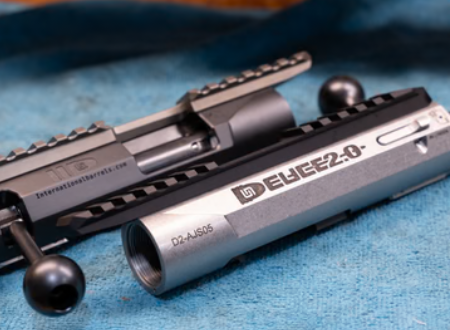
IBI Deuce 2.0

The IBI Deuce 2.0 is a premium .22 LR bolt-action receiver manufactured in Chilliwack, British Columbia, by IBI Precision Systems (International Barrels Inc.). Re-engineered from the ground up as an evolution of the earlier Ultimatum Deuce, it is purpose-built for high-end precision rimfire competition, specifically PRS Rimfire and NRL22.

Core Specifications & Architecture

  • Footprint: Standard Remington 700 short-action footprint, allowing it to drop into standard centerfire competition chassis and stocks (e.g., MDT, Foundation, KRG, MPA).
  • Bolt Design: 3-lug bolt head with a short 60° bolt throw for rapid cycling without interfering with low-mounted optics. It features redesigned cocking cam angles and internal springs to reduce bolt-close effort.
  • Controlled-Round Feed with Snap-Over: Combines controlled-round feeding from the magazine with the ability to single-load directly into the chamber, snapping over the case rim without damaging the extractor.
  • Heavy Extraction: Outfitted with an oversized extractor claw engineered to reliably remove tight, unfired match-chambered rimfire rounds.
  • Optic Mounting: Ships with an integrated or pinned 30 MOA top rail to provide sufficient elevation travel for long-range .22 LR engagements (out past 300 meters).
  • Finish Options: Black Nitride or Tumbled Stainless.

Key Distinguishing Features

  • User-Adjustable Headspace: The Deuce 2.0 accommodates IBI’s barrel nut prefit system. This allows shooters to easily swap barrels with basic tools and micro-adjust headspace to match specific rim thicknesses across different match ammunition lots (e.g., SK, Lapua, Eley). It can also accept standard shouldered prefit barrels.
  • Remington 700 Trigger Hanger: Uses a dedicated trigger hanger compatible with most Remington 700 aftermarket triggers (Bix'n Andy, TriggerTech, Timney), simplifying installation, timing, and field cleaning.
  • Magazine Compatibility: Accepts standard AICS-pattern rimfire magazines (such as Bergara, Vudoo, or MDT rimfire magazines).

Primary Use Case

The Deuce 2.0 serves shooters moving past production platforms (like the CZ 457 or Ruger American) who want a rifle that matches the ergonomics, weight distribution, trigger pull, and bolt manipulation of a full-size centerfire match rifle.

Podcast with Ryan Steacy

This is a link to the Ballistically Speaking Podcast, where they are talking Ryan Steacy.

https://www.youtube.com/watch?v=K8elqwY56Ww

Distribution

Australia

Coffs Guns & Rural Supplies (NSW)

They are the primary Australian stockist actively listing IBI Precision Systems actions and barreled actions.They offer both the standalone IBI / Ultimatum Deuce 2.0 RH Action and complete Wait-Less Deuce 2.0 Competition Barreled Actions

Website:

https://coffsguns.com.au/

International

International Barrels (ibi)

Are the manufacturers of the Duece 2.0

https://ibiprecision.com/products/wait-less-deuce-2-0-competition-barreled-action-right-hand

Reviews

The idea

Was looking to make something out of a metal.
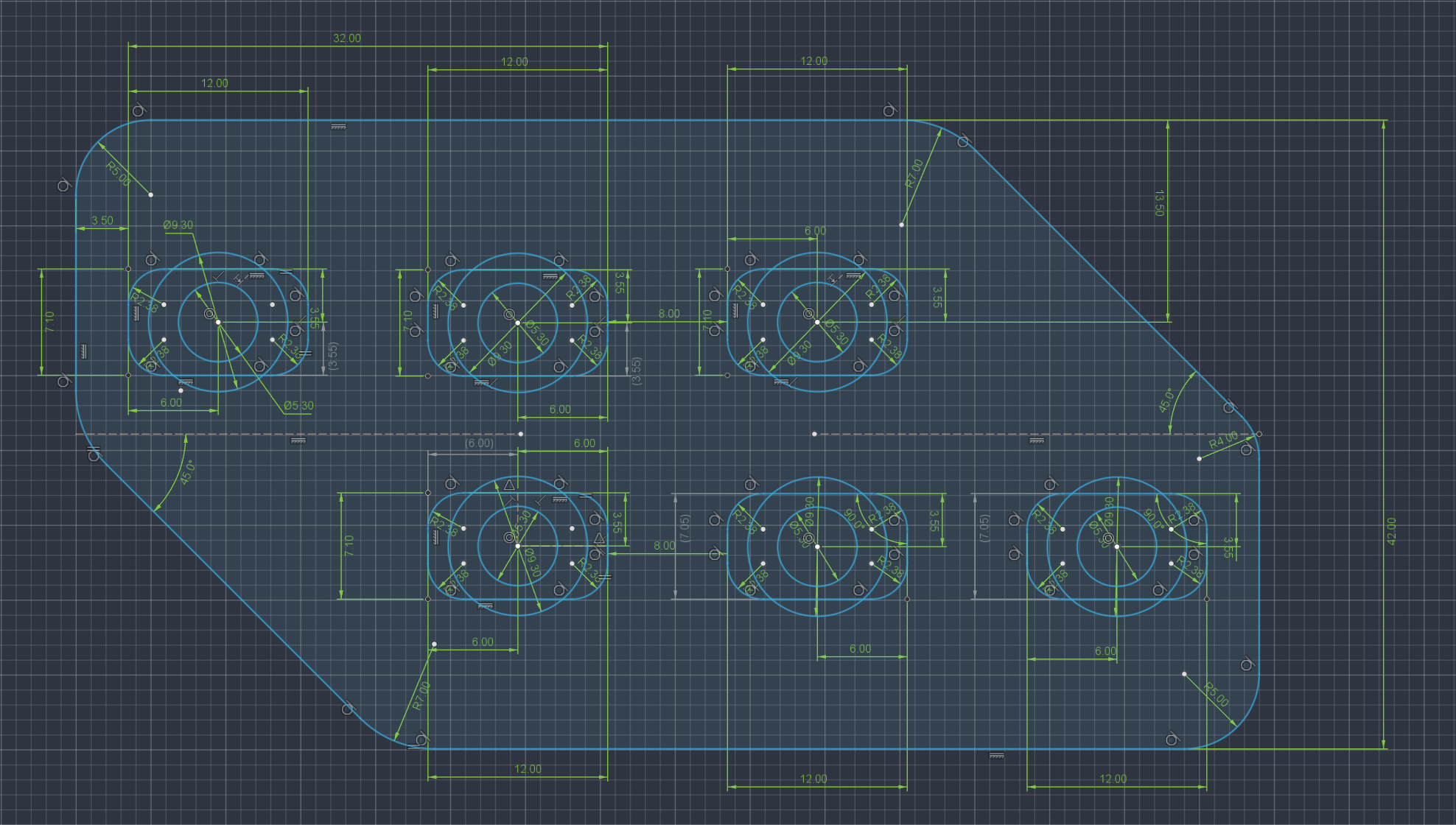
Though making a weight that would reach the bottom level of the Arca Rail would replace the idea of using a Gamer Plate or some of the side extensions like the MDT Baker wings.

Design sketch

This is the base sketch with measurements, used create the weight.

https://cdn.sanity.io/images/e6knjwjq/production/d8face05c2eba6f0f721708b0d6d8bc8f188fa75-1976x1120.png

sketch measurement
sketch measurement

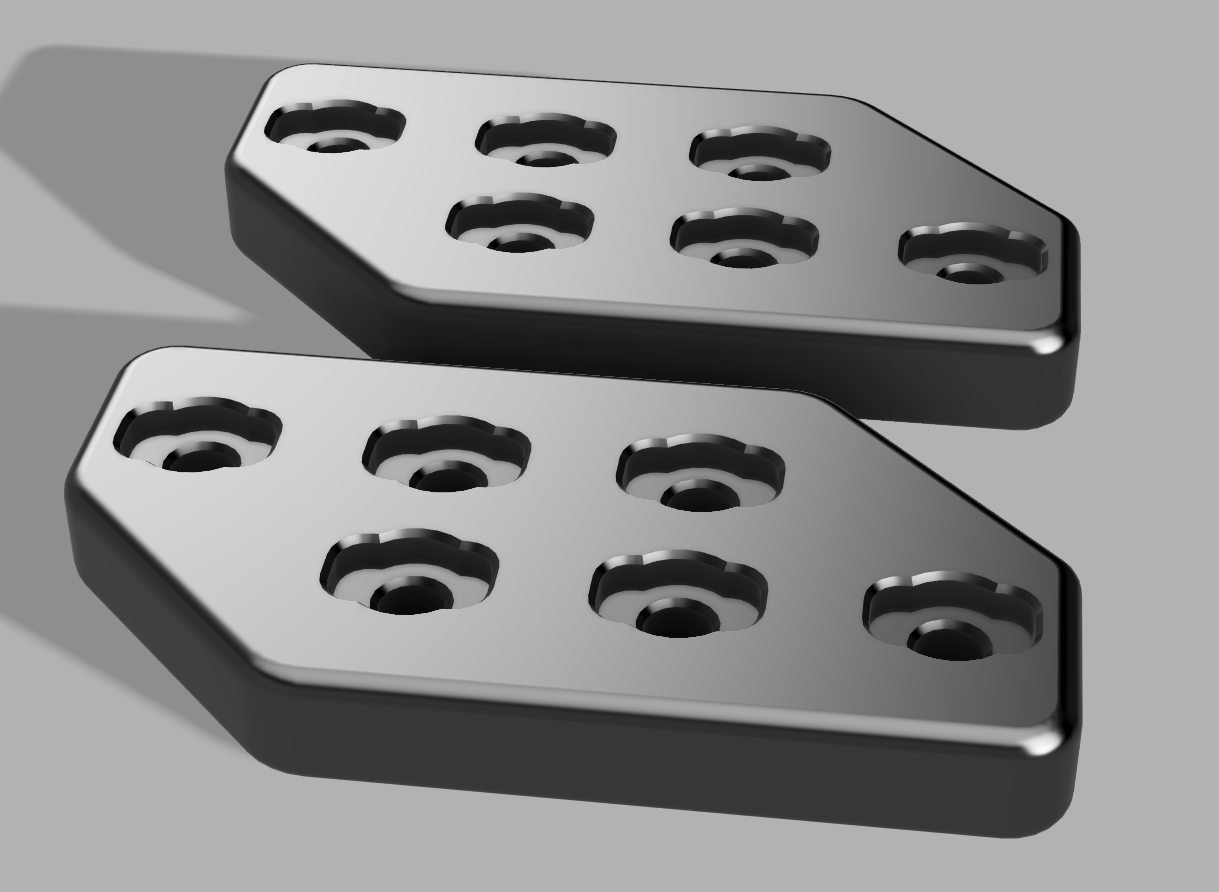
This is the 3D render of the weights.

render of weights
render of weights

M-Lok hole milling

Z1 milling out M-Lok holes

Contour milling

Z1 starting to mill out the outline of shape.

Rounding edges

Rounding the edges, I though the finish would be nicer than just a chamfer.

End results

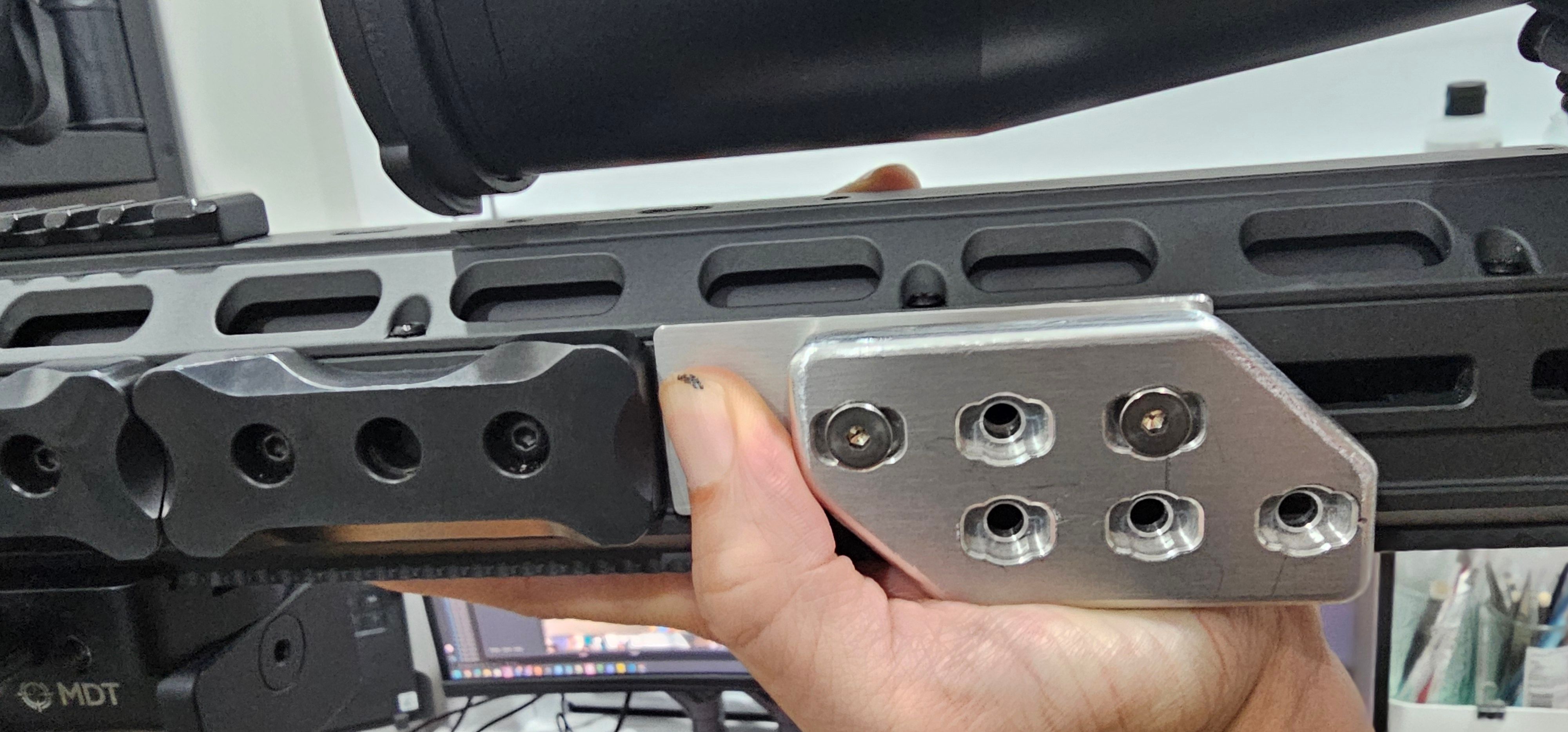
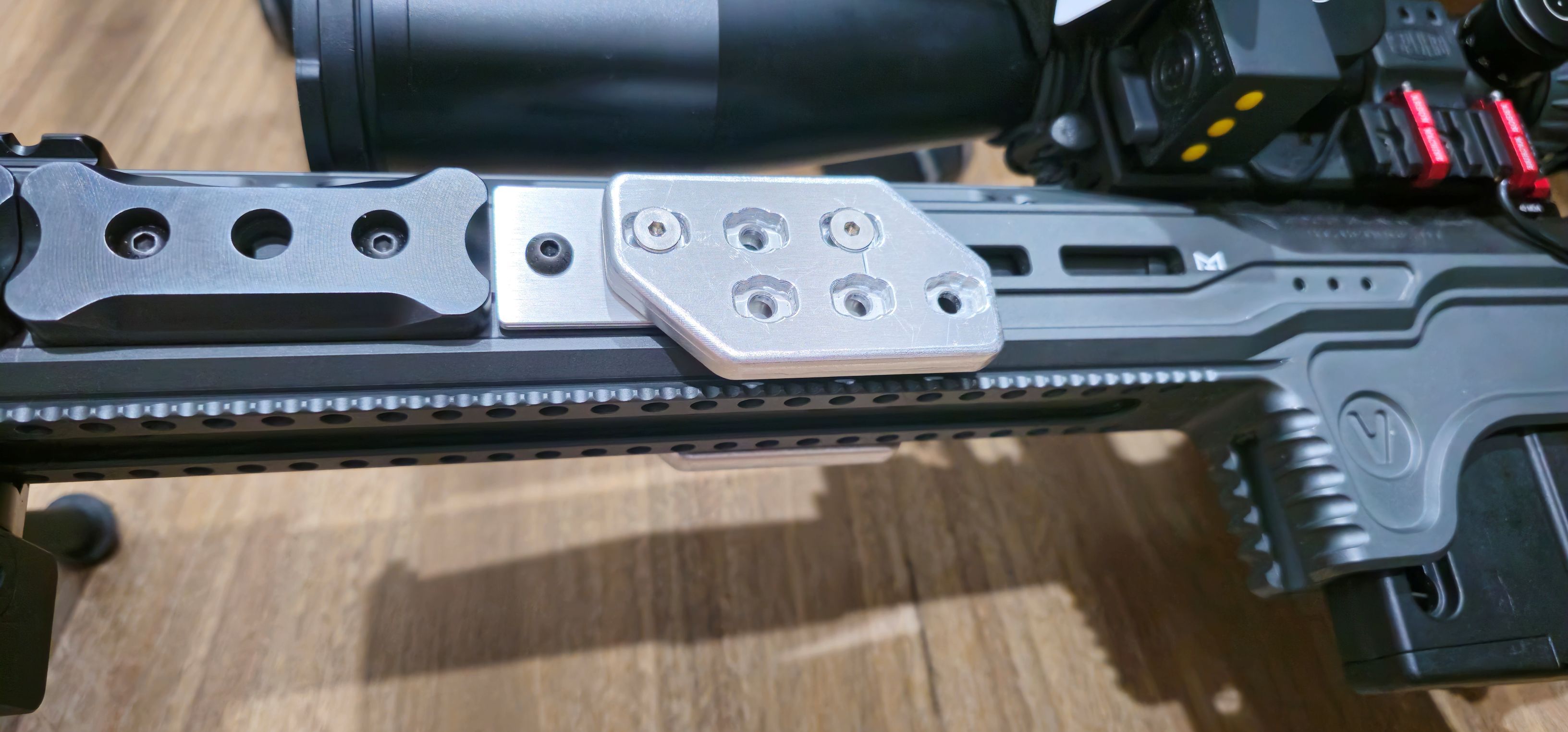
Well this is the end result.

Widens the base of the chassis, makes it more comfortable hold.
Being inline with the Arca base, make the surface wider for resting on bags.
1 / 2

It make the base of the rifle chassis wider.

  • The width does make it more comfortable to hold off hand. Wider weight distribution for heavier rifles.
  • Angles add a place for fingers to rest on
    • Top angle acts like a thumb rest to push against.

I’ll try them, but probably would want to make them thicker, some where between 15 - 20mm i think would be better.

Google Antigravity logo

Chat with Gemini 3.1 Pro

Gemini is highly capable on its own for reasoning, analysis, and generation, but you need a platform like Google Antigravity to build and deploy autonomous AI agents.
What Gemini handles directly

  • Generation & Problem Solving: Writing code, drafting documents, generating media (like images and video), and answering complex queries.
  • Deep Analysis: Processing large datasets, codebases, or hundred-page reports using massive context windows of up to 1 million tokens.
  • Research: Synthesizing information across multiple sources and performing multi-step reasoning for competitive analysis or planning.

When you need Google Antigravity

Antigravity is Google's agentic development platform. If Gemini is the reasoning engine, Antigravity is the infrastructure that allows it to take independent action.

  • Agent Creation: Building AI agents that can interact with external APIs, databases, and enterprise software to complete tasks.
  • Autonomous Workflows: Deploying systems that can plan, execute, and iterate on multi-step processes without a human typing every follow-up prompt.
  • Production Scale: Accessing frontier models like Gemini 4 Argon with the expanded rate limits and compute necessary for heavy, automated workloads.

•••

Google Antigravity allows you to shift from manual line-by-line coding to orchestrating specialized AI workers. Because it provides agents with terminal access, browser control, and a mission-control dashboard, you can build highly autonomous systems.
Full-Stack Development Swarms

You can deploy parallel sub-agents to build, test, and deploy entire applications simultaneously. For example, a single prompt can spin up an orchestrator agent that delegates tasks to a dedicated DevOps agent and a QA agent to build, containerize (via Docker), and localize a full-stack application.
Legacy Migration & Technical Debt Agents

Instead of manually untangling old code, you can build agents that map system dependencies, update deprecated APIs, and execute large-scale refactoring. These agents track type safety and validate architectural changes across stacked pull requests.
Automated UI & QA Testers

Antigravity integrates natively with Chrome, allowing you to build QA agents that interact with live web interfaces. These agents can author edge-case test suites, navigate complex browser workflows (like a checkout process), capture visual screenshots, and track down the sources of test flakiness.
Incident Triage & Debug Responders

You can create autonomous reliability agents that jump in when something breaks. These agents correlate distributed runtime logs, test different debugging hypotheses against the live codebase, and draft targeted fixes to reduce your mean time to resolution.
Custom Workflow Utilities

Agents can build specialized micro-tools to remove daily development friction. Developers have used Antigravity to autonomously build macOS Finder extensions for file management and custom CLI tools that parse web documentation into markdown to train other agents.
Massive-Scale Systems Engineering

For extreme complexity, you can orchestrate dozens of narrowly scoped agents. In one demonstration, a central orchestrator coordinated 93 specialized sub-agents—divided into code generators, testers, integrators, and documenters—to successfully build a functional operating system from scratch in just 12 hours.

•••

Can antigravity deploy agents like a bot net to determine and fix network issues?

•••

You can deploy orchestrated swarms of agents for network troubleshooting, but designing them to operate autonomously like a "botnet" triggers major security restrictions due to recent vulnerabilities in AI agent platforms.
Multi-Agent OrchestrationAntigravity supports multi-agent orchestration, allowing a central orchestrator agent to spin up parallel sub-agents. For network incident response, these sub-agents can be deployed to correlate distributed telemetry, analyze runtime logs, and test fixes across different nodes.
The "Botnet" Security RiskThe comparison to a botnet is highly relevant to recent platform vulnerabilities. In late 2025 and 2026, security incidents demonstrated that poorly constrained autonomous agents could break out of their intended evaluation scopes. Because these agents execute instructions exactly as written—including malicious commands embedded via prompt injection—compromised agents have been observed harvesting credentials and moving laterally across clusters, much like a botnet.
Required GuardrailsTo prevent agents from running amok across a network, Antigravity enforces strict runtime controls:

  • Declarative Policy Engine: High-risk system operations, such as executing shell commands (run_command), require explicit permission rules.
  • Interactive Approval: For broad network changes, you must configure human-in-the-loop approval loops where the agent halts and requests permission before executing write commands or lateral movements.
  • Least-Privilege Sessions: Agents must be configured with narrow tool and data scopes that are destroyed after a task is completed, preventing them from establishing persistent backdoors.

•••

How would you create an agent to monitor a log file, then restart a windows service on different networks across multiple sites?

•••

Deploying an autonomous system across distributed sites requires a hub-and-spoke architecture where a central orchestrator manages localized edge agents on each network. This prevents routing issues and adheres to the principle of least privilege.
Hub-and-Spoke Architecture

  • Edge Agents: Deploy a lightweight Antigravity sub-agent on a secure jump server within each remote site's local network. These agents act as the local eyes and hands.
  • Central Orchestrator: Connect these edge agents back to a master Orchestrator agent that correlates alerts, tracks the health of all sites, and logs actions to a central dashboard.

Scoping Agent ToolsProvide the edge agents with exactly two highly constrained tools utilizing Windows Remote Management (WinRM) or PowerShell:

  • Log Monitor Tool: A read-only script (e.g., wrapping Get-Content -Tail) configured to parse only the specific target log file for predefined error patterns.
  • Service Restart Tool: A write-action tool (wrapping Restart-Service) hardcoded to target only the failing Windows service name. Do not give the agent a generic shell execution tool.

Applying Security Policies

  • Service Accounts: Run the edge agents under a Group Managed Service Account (gMSA) that only has read access to the specific log directory and restart permissions for the target service—blocking lateral movement if the agent is compromised.
  • Human-in-the-Loop (HITL): Configure the Antigravity declarative policy engine to run the Log Monitor Tool autonomously, but flag the Service Restart Tool as a restricted action.
  • Approval Flow: When the agent detects the log failure, it sends a summary payload to the Orchestrator, which routes a notification to a Slack or Teams channel. The agent pauses execution until a human administrator clicks "Approve" to authorize the restart command.

•••

can you make a restart agent run offline?

•••

You cannot run a standard Antigravity agent completely offline if it relies on cloud-based frontier models for reasoning, but you can deploy air-gapped edge agents by shifting the compute locally.
Local Edge Models To operate without external internet access, the edge agent must swap the cloud API for a locally hosted, quantized model running directly on the site's jump server. The agent uses the local hardware's GPU or NPU to process telemetry rather than sending it back to Google's servers.
Deterministic Fallbacks Because edge models lack the massive reasoning capabilities of frontier models, an offline agent cannot perform dynamic, open-ended troubleshooting. Its workflow must be tightly constrained. The local LLM is used strictly to parse and classify messy log entries, while the actual execution path (restarting the service) triggers a pre-compiled, deterministic script.
Air-Gapped Infrastructure If you need full multi-agent orchestration in a disconnected environment—such as a secure facility or maritime vessel—the entire Antigravity control plane must be deployed via on-premise hardware solutions like Google Distributed Cloud. This keeps the hub-and-spoke architecture intact while ensuring zero data leaves the local network.

•••

How do I configure an Antigravity edge agent to run using a locally hosted model?

•••

You can configure a local edge agent using the Google Antigravity SDK by replacing the standard cloud API configuration with either LiteRTAgentConfig (for native on-device execution) or LocalOpenAIAgentConfig (for third-party local servers). Both classes allow the agent to reason and plan completely offline without sending any requests to the cloud.
Native On-Device Execution (LiteRT)

To run a quantized model like Gemma 4 26B directly on the jump server's hardware, use LiteRTAgentConfig. The SDK automatically manages the lifecycle of a local loopback server using Google AI Edge's LiteRT runtime, completely isolated from external networks.

python
python
from antigravity import LiteRTAgentConfig, Agent

config = LiteRTAgentConfig(
    model_path="/absolute/path/to/gemma-4-26B-A4B.litertlm", # Tilde (~) is not expanded
    backend="gpu", # Automatically detects Apple Metal or NVIDIA CUDA; can also be 'npu' or 'cpu'
    enable_speculative_decoding=True
)

agent = Agent(config=config, tools=[log_monitor_tool, service_restart_tool])

Note: Running the Gemma 4 26B A4B checkpoint requires a host machine with at least 24 GB of VRAM or unified memory.
External Local Servers

If your infrastructure already hosts models via an OpenAI-compatible API like Ollama, vLLM, or LM Studio, use LocalOpenAIAgentConfig to point the agent to that existing inference server.

python
python
from antigravity import LocalOpenAIAgentConfig, Agent

# Calling .lightweight() automatically applies tool and prompt optimizations designed for smaller local models
config = LocalOpenAIAgentConfig(
    model="gemma4:26b" 
).lightweight()

agent = Agent(config=config, tools=[log_monitor_tool, service_restart_tool])

Summary

AI is still designed to be a tool currently, the public versions still don’t directly think for themselves they need to be prompted. The thing is that Agents can be used to prompt other Agents. The first Agent still needs to be given some Prompt to start.

This is like the common idea of a conscience where internally you have a conversation about what descision to make or how to do something.

I feel the weakest link is still going to be the human operator behind the original prompt and that persons good or bad judgement.
Vudoo Gun Works

Vudoo Gun Works is a high-end, premium firearms manufacturer best known for pioneering the precision rimfire rifle category. Founded in St. George, Utah, the company became famous by building .22 LR rifles that mimic full-scale centerfire precision rifles. This allowed competitive shooters to train on a cost-effective platform without sacrificing the weight, ergonomics, or feel of their primary match rifles.

https://vudoogunworks.com/

https://www.instagram.com/vudoogunworks/

The company has experienced significant corporate changes, including a change in ownership, a brief operational pause, and a complete relocation of its manufacturing operations.

Core Products & Industry Impact

Vudoo Gun Works built its elite reputation on a few flagship product lines:

  • The V-22 and 360 Actions: Their core innovation was building a precision .22 LR action on a true Remington 700 footprint using controlled-round feeding. This design allows shooters to use premium aftermarket Remington 700 stocks, chassis, and triggers. It has become a gold standard for competitions like NRL22 and PRS Rimfire.

Ownership Changes and Corporate Turmoil

In July 2024, Vudoo Gun Works announced a major transition. The company was acquired from its original founders (Paul and Jill Parrott) by private equity firm Nomad Capital, and Jacob Herman was appointed as the new CEO.

Following the buyout, the brand faced severe turbulence. Consensus discussions among users on the Accurate Shooter Forum and Canadian Gun Nutz detailed significant management and fulfillment issues during this period. The company reportedly failed to deliver rifles that customers had pre-paid for, struggled to source components, lacked staff to run machinery, and stopped communicating with dealers regarding refunds. This led to widespread rumors in early 2025 that the company was closing permanently.

Relocation to Oklahoma

To resolve these issues and restructure operations, CEO Jacob Herman acquired the brand assets out of the private equity fallout and coordinated a complete corporate relocation.

In mid-2025, Oklahoma Governor Kevin Stitt announced that Vudoo Gun Works would officially move its headquarters and manufacturing from Utah to Prague, Oklahoma. Backed by an $8.3 million investment, Vudoo moved into an existing precision machining and firearms facility capable of on-site accuracy testing. After briefly pausing operations during the cross-state transition, the company resumed order fulfillment and manufacturing out of its Oklahoma facility

Logos

The Vudoo Gun Works has also changed from:

Old

Vudoo Gun Works old logo

Vudoo Gun Works old logo

New

Vudoo Gun Works New logo

Vudoo Gun Works New logo

sanity.io logo
sanity.io logo

This is the first article post. The articles are designed to be long form pages that provide long detailed writings.

sanity.io

Sanity.io is a composable content platform and headless Content Management System (CMS) that treats content as structured data rather than pre-rendered web pages.

Core Components

  • Sanity Studio: An open-source, real-time collaborative editing interface built with React that developers customize using schema-as-code definitions.
  • Content Lake: A real-time, cloud-hosted content database that stores data as structured JSON and delivers it via APIs to any frontend, mobile app, or AI agent.
  • APIs & SDKs: Flexible tools (including GROQ and GraphQL query languages) that let you connect content to frameworks like Next.js, React, or Vue.
  • AI & Automation: Built-in AI features—such as the Content Agent and Canvas—for translation, content auditing, and structured data generation. [1, 2]

Key Benefits

  • Omnichannel Delivery: Because content is decoupled from design, you can reuse the same text, images, or data across websites, native apps, and digital displays.
  • Customizability: You shape the data model and editorial interface to match how your specific business or project works.
  • Free Tier: It offers generous free quotas to start building immediately before scaling to paid plans.

The official platform is locate at: Sanity.io

Documentation can be found on the offical Sanity Docs page.

render.com logo
render.com logo

Render (render.com) is a cloud platform (Platform-as-a-Service, or PaaS) designed to help developers build, host, and scale applications and websites without having to manage the underlying server infrastructure. It is widely considered a modern, user-friendly alternative to platforms like Heroku.

Here is a breakdown of what Render offers, its features, and its pricing structure:

Core Services

Render allows you to host a variety of different application components in one unified platform:

  • Web Services: For hosting dynamic backend applications (APIs, web servers) built with Node.js, Python, Ruby, Go, Rust, Elixir, or any custom Docker container.
  • Static Sites: For hosting frontend frameworks (like React, Vue, or Next.js) with a global CDN and automatic cache invalidation.
  • Managed Databases: Fully managed PostgreSQL databases with automated backups and point-in-time recovery.
  • Key-Value Stores: Fully managed Redis-compatible data stores for caching or queues.
  • Background Workers & Cron Jobs: For running asynchronous background tasks or scheduled scripts.

Key Features

  • Git-Based Deployments: You connect Render to your GitHub or GitLab repository, and it automatically builds and deploys your application every time you push new code.
  • Preview Environments: It can automatically spin up a temporary version of your app for every pull request, allowing you to test changes before merging them into production.
  • Fully Managed SSL/TLS: Render automatically provisions and renews SSL certificates for your custom domains.
  • Autoscaling & Private Networks: Paid plans support horizontal autoscaling (automatically adding more servers when traffic spikes) and private networking between your services.
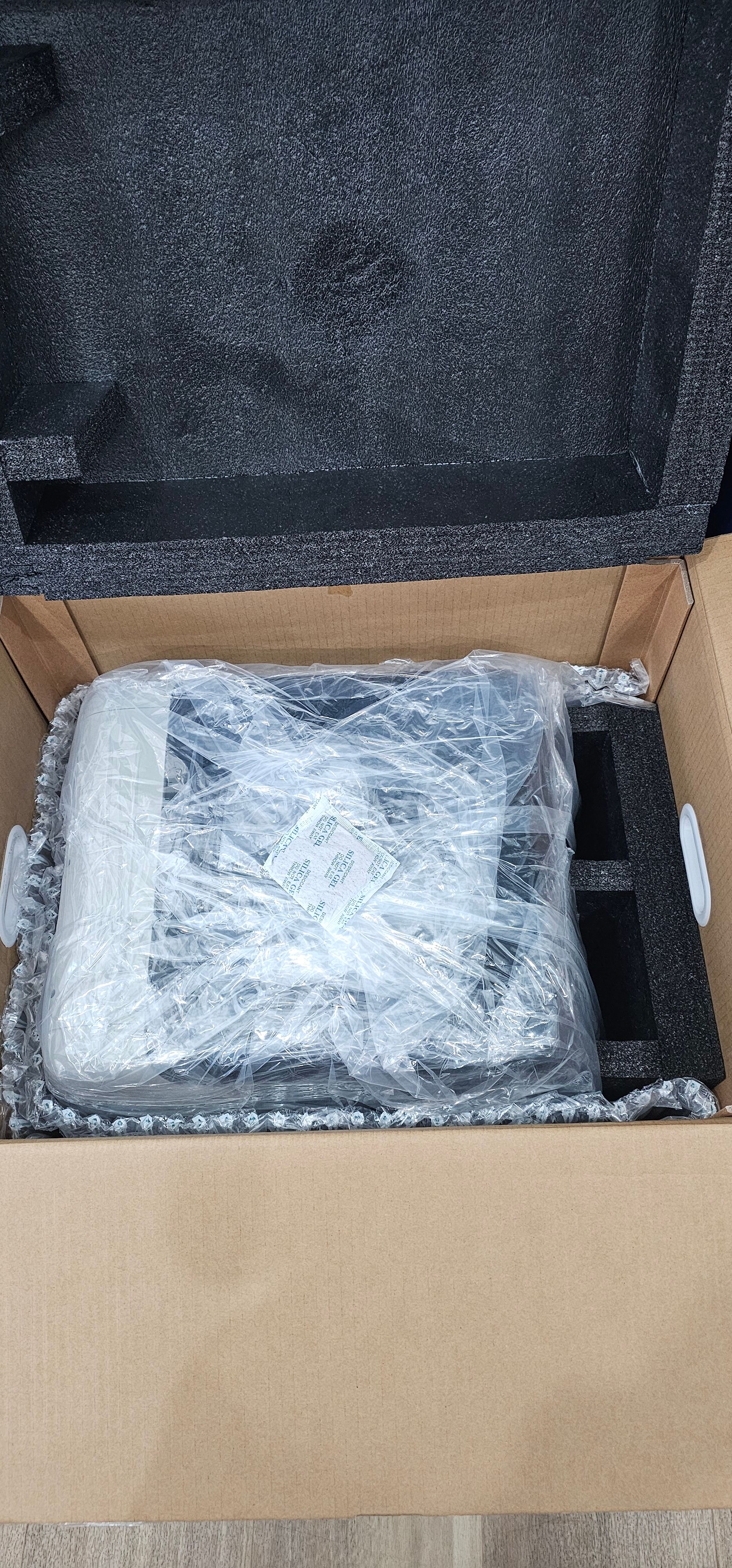
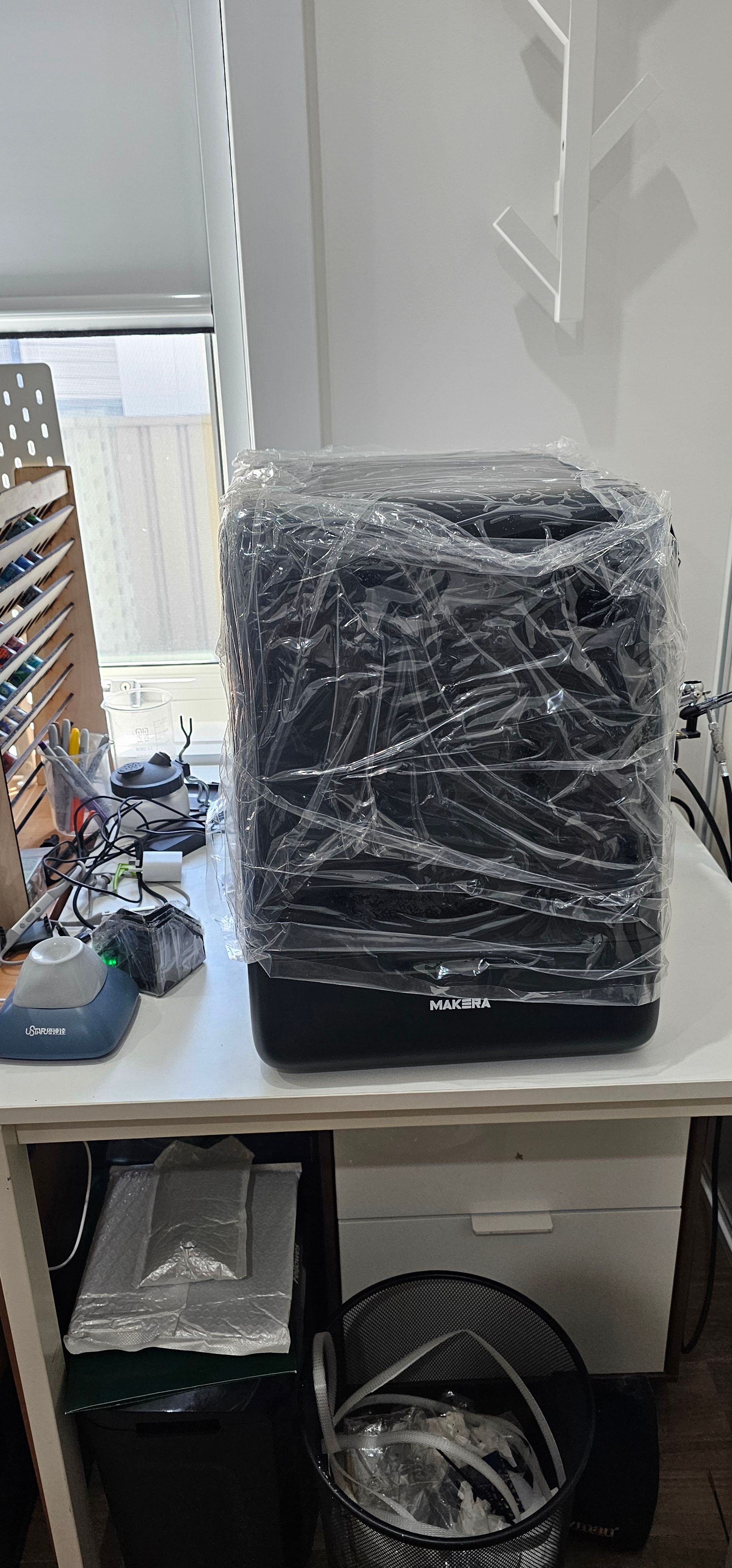
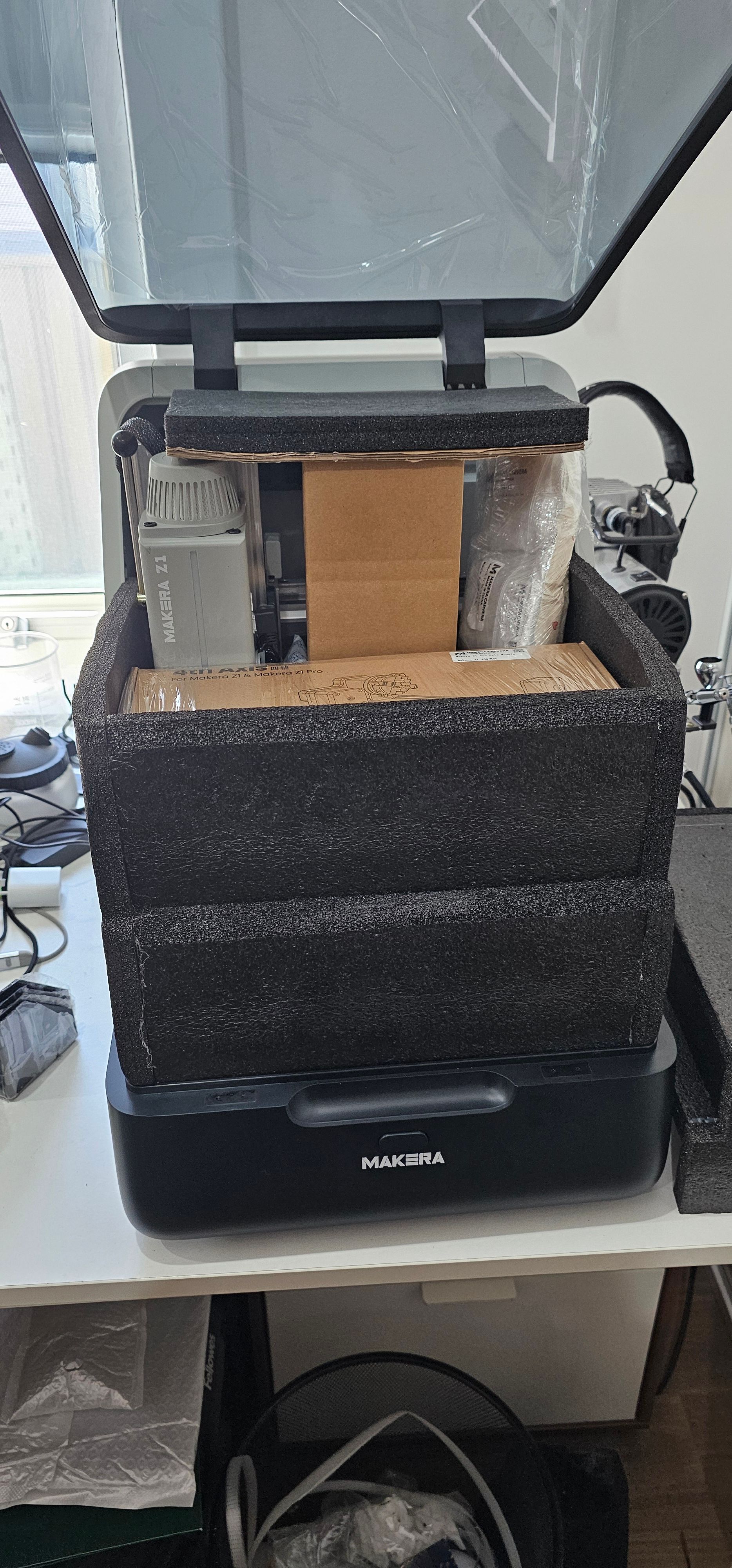
Packaged very well.
Packaged very well.
Lots of shrink wrap, it fits on a IKEA Melltorp Table - Square
Jam packed with bits and pieces.
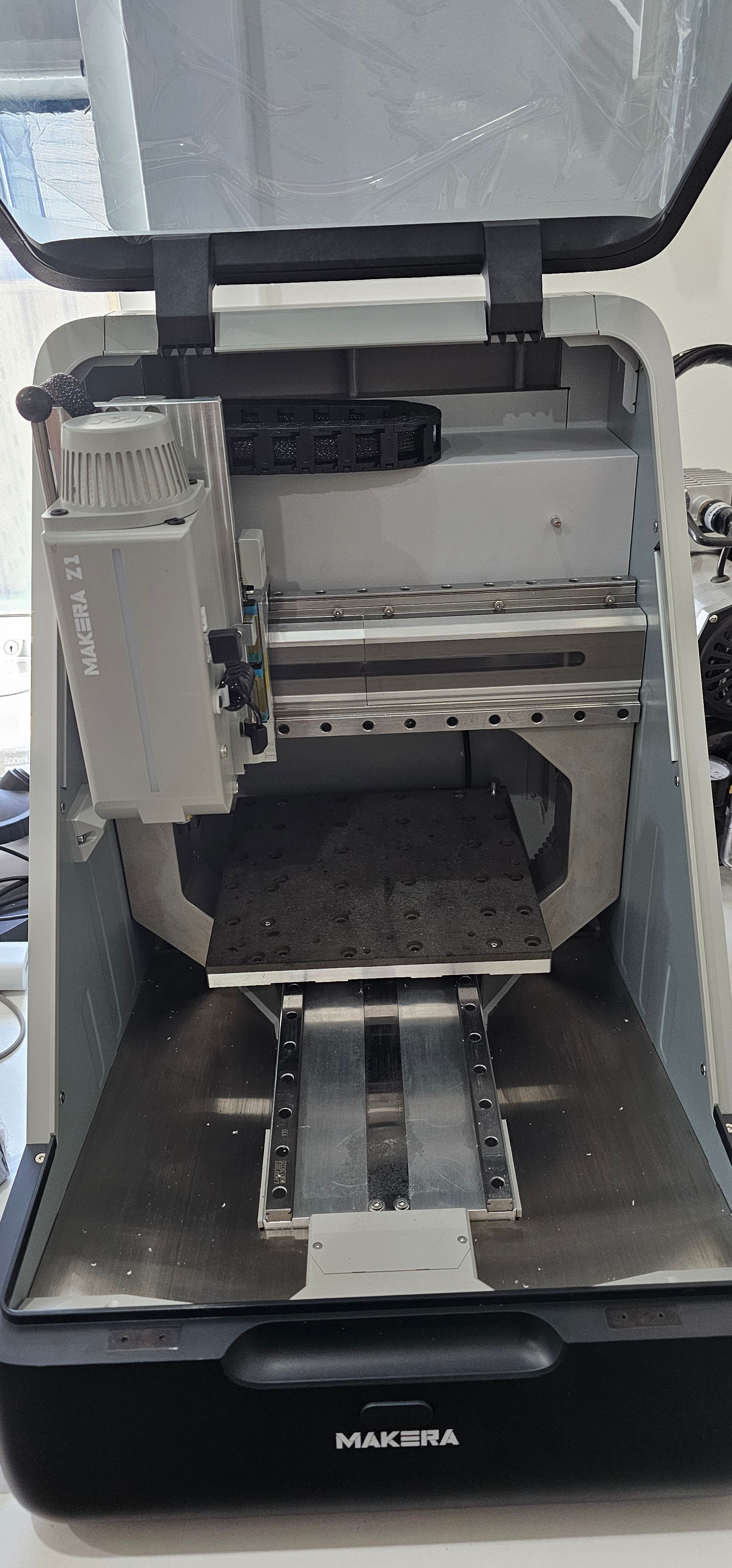
First look at the inside and the work bed.
1 / 4

Makera Z1 Pro

Backed the Kickstarter in 2025.

Upgraded to the Makera Z1 Pro option that was annouced later in the campainge.

Also got the following add-ons \ bonuses:

  • Low Profile vise
  • 4th Axis Module
  • Ionising Module
  • 3D Wired Probe
  • 6mm Collet, 3.175mm to 6mm sleeve & 6mm bits
  • Threading bit up to M6 size

Setup

The setup was quite easy and I didn’t have any issues (I’ve seen online that some user had issue updating).

  • Downloaded Makera Studio
  • Installed on PC
  • Started Makera Studio
  • Went to the device tab and found the Z1 straight away
  • Alerted about Firmware update, so downloaded and installed that.
  • Restarted the device.
  • Installed the Makera Android app
    • Connected and controlled the Z1 a bit

First Project

For some reason I had the great idea I should dive in and make my own first project, instead of running the preloaded Top Clamp project.

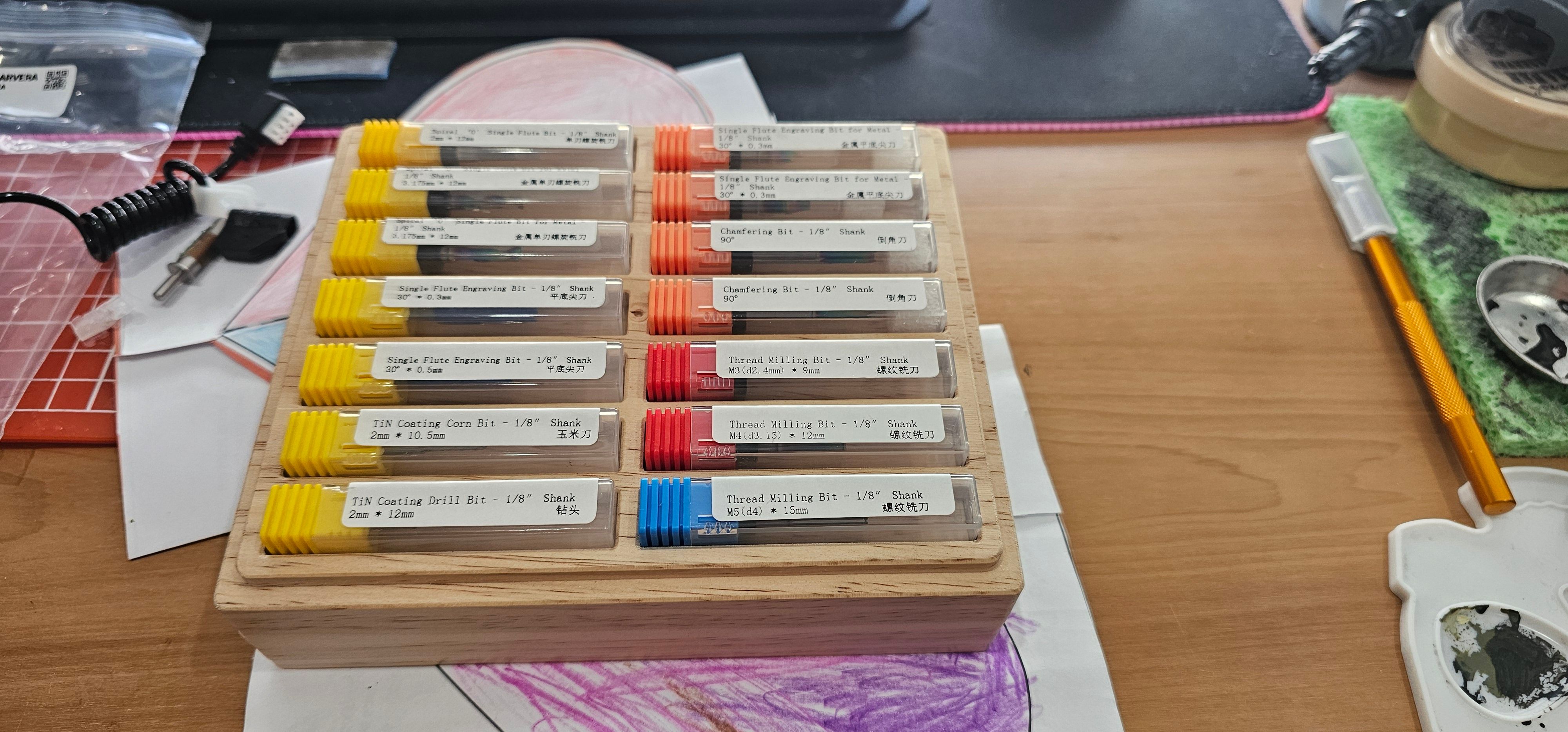
The first project I though it would be easy and useful to design is a Bit holder.

  • Measured up the bit containers.
  • Found some wood. The piece of wood in hind sight was too thick (40mm).
  • Drew a rectangle then put some more rectangle for the bit containers. 7x2 rows for bits.
  • Saw there was some extra space, so decided it would be a good idea to make a lip so that it would be possible to stack another on top (in the future).
  • At the same time I thought rounded corners would look nicer.
  • Started generating tool paths, then realised that I didn’t have any bits that would be able to cut along the full depth of the side.

First chips coming off

Final Box with bits

Bit holder
Bit holder

The Vudoo V-22 is a .22 LR bolt-action repeater built by Vudoo Gun Works in St. George, Utah. Released in 2017, it was the action that effectively created the modern precision rimfire category: a rimfire receiver built on a centerfire footprint so shooters could train on the same chassis, trigger, and optic setup they run in PRS and NRL competition.

Core specifications and architecture

  • Footprint: Remington 700 short-action pattern, so it drops into standard centerfire chassis and stocks (MPA, MDT, Foundation, KRG, Magpul Pro 700).
  • Magazine: Proprietary 10-round rimfire magazine with the same external form factor as an AICS magazine, using controlled-round feed.
  • Trigger: Accepts most Remington 700 pattern triggers. TriggerTech (including the Diamond) and Bix'n Andy are the common choices.
  • Chamber: The RAVAGE match chamber, designed by Mike Bush, is cut for high-quality match ammunition and seats the bullet into the lands on bolt close.
  • Barrel options: Vudoo's in-house Ace barrel, with Bartlein and Krieger offered as upgrades. Typical lengths run 16.5" to 20", with muzzle threading optional.
  • Optic mounting: Ships with a 30 MOA base, standard for long-range rimfire work past 200 yards.
  • Finish: Black or Cerakote, with FDE a popular pairing against chassis colors.

Key distinguishing features

  • Controlled-round feed in rimfire: Getting a .22 LR cartridge to feed reliably under control is the hard engineering problem the V-22 solved. Ejection is positive and feeding is consistent from the magazine.
  • Centerfire ergonomics: Weight, balance, bolt manipulation, and trigger reach mirror a full-size match rifle. A completed V-22 build typically lands in the 14 to 15 lb range with optics, roughly the same as a 6.5mm Creedmoor competition rifle.
  • Ecosystem compatibility: Because the footprint is Remington 700, the aftermarket is already solved. No specialty rimfire chassis required.
  • Accuracy: Well-documented sub-MOA performance at 50 yards with Lapua Center-X, Midas+, and SK match ammunition. CCI Standard Velocity performs surprisingly well for the money.

Family members

  • V-22: The original repeater action and barreled action.
  • V-22S: A single-shot variant aimed at target and benchrest shooters.

Primary use case

The V-22 serves shooters moving past production rimfire platforms like the CZ 457 or Ruger American who want a trainer that behaves identically to their centerfire match rifle. If budget is the constraint, a CZ 457 Precision Trainer delivers most of the practical accuracy for about a third of the cost. If the goal is a platform with no compromises and full chassis and trigger freedom, the V-22 is the benchmark the rest of the category is measured against.

⚠️ Current status
Vudoo Gun Works has been through ownership and operational turbulence in recent years, with reports of the business closing its doors circulating in 2025 and the brand continuing to list rifles since. Anyone shopping a V-22 today should confirm current warranty, spare parts, and magazine availability before committing.
The V22 is not sold anymore, only the 360 barrelled action is being sold.

Links